Why Ecommerce Sales Don’t Improve Even With Traffic, Ads, and Discounts
Many ecommerce teams assume that low sales mean not enough traffic.
In reality, most struggling stores already have enough visitors - but those visitors don’t feel confident enough to buy.
This page explains why conversion stalls, even when:
- Ads are running
- UX looks fine
- Prices are competitive
- Products are good
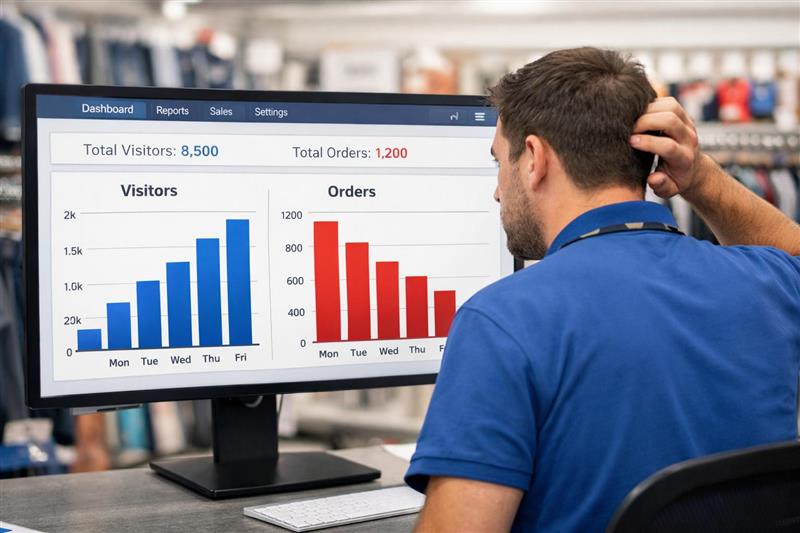
The Hidden Gap Between Traffic and Conversion
Traffic answers “Who arrived?”
Conversion answers “Who felt confident enough to buy?”
Most ecommerce optimizations focus on:
- Page speed
- UI polish
- Checkout friction
- Discounting
But buyers leave earlier, often on the product page itself.
The Role of Product Awareness in Ecommerce Conversion Growth
High-converting stores don’t just show products. They answer buyer intent in context.
High-converting stores don’t just show products. They answer buyer intent in context.
That means:
- Answers specific to the exact product
- Language matching buyer questions
- Coverage of real usage scenarios
- Confidence reinforcement at decision points
When this happens:
- Bounce rates drop
- Time on page increases
- Add-to-cart becomes decisive
AI alone doesn’t fix conversion.
What matters is what the AI understands:
- Product attributes
- Variations
- Use cases
- Customer language
When AI is product-aware, it can:
- Generate relevant answers
- Surface the right information
- Reduce hesitation at scale
This is where modern ecommerce conversion optimization is heading.
The shift is simple, but uncomfortable:
From:“How do we get more traffic?”
To:“What question stopped this buyer from purchasing?”
Stores that win focus on answer completeness, not just visibility.
If your ecommerce sales are not growing:
- Audit unanswered buyer questions
- Identify product-level uncertainty
- Reduce reliance on generic FAQs
- Measure confidence, not just clicks
Only after this does technology - AI or otherwise - deliver real ROI.
Why Shoppers Abandon Carts Even After Adding Products
Cart abandonment is rarely about the cart.
Common assumptions:
- Shipping cost surprise
- Complicated checkout
- Payment failure
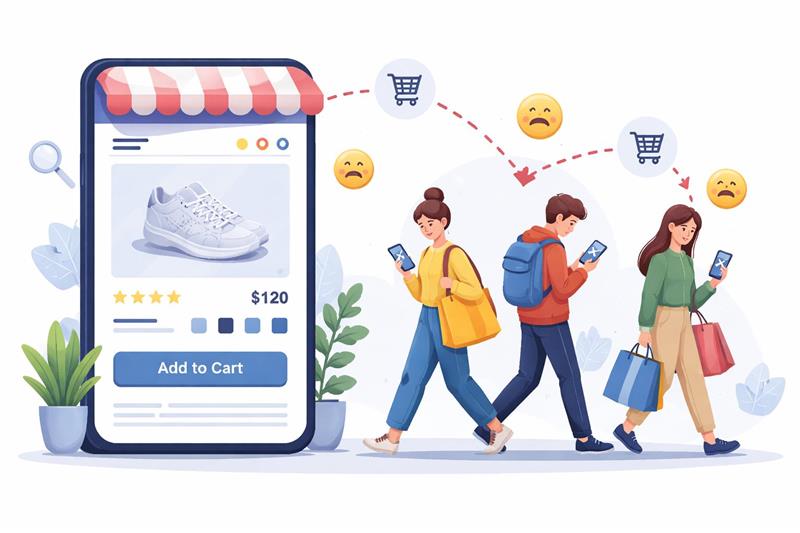
Those do happen - but analytics consistently shows that many users:
- Add to cart
- Navigate back
- Re-read product details
- Leave without checking out
That behavior signals unanswered questions, not checkout friction.
Why “Good UX” Still Results in Poor Conversion Rates
A clean UI does not equal clarity.
Modern ecommerce buyers expect:
- Product-specific answers
- Usage clarification
- Compatibility confirmation
- Comparison guidance
When these answers are missing:
- Buyers hesitate
- They open new tabs
- They search externally
- They don’t return
This is why stores with excellent design can still have 2-3% conversion ceilings.
The Real Reason Ecommerce Sales Plateau
Sales plateau when buyer doubt scales faster than trust.
As catalog size grows:
- Generic FAQs stop working
- Static descriptions miss edge cases
- Support can’t pre-answer everything
This creates what we call a confidence bottleneck:
Buyers want certainty at decision time - but the site can’t respond dynamically.
Why Traditional CRO Tactics Hit a Ceiling
A/B tests can optimize:
- Button color
- Layout
- Micro-copy
They cannot:
- Generate new answers
- Adapt to product-specific questions
- Address long-tail buyer concerns
At some point, conversion stagnates not because UX is bad, but because knowledge is missing.
How Buyer-Confidence Gaps Kill Ecommerce Growth
When buyers don’t find answers:
- They don’t complain
- They don’t contact support
- They simply leave
Analytics shows:
- High PDP views
- Low add-to-cart follow-through
- Repeated visits without purchase
This silent revenue loss is often misdiagnosed as “low intent”.
Frequently Asked Questions
Because buyers are unsure, not uninterested. Most exits happen due to missing product clarity.
No. Many abandon carts due to unanswered questions discovered after adding products.
Yes - but only if they are product-specific and context-aware. Link the how-it works page here
AI is not mandatory, but it is currently the only scalable way to address long-tail buyer questions across large catalogs.